The right pressure for the surface.
Full-pressure cleaning where it belongs — concrete, brick, stone, fencing, and hard surfaces — with an even pass and nothing etched, striped, or blown out.
Pressure is a tool, not a service
The damage we get called out to fix is almost never from too little pressure. It's wand marks burned into a driveway in a zigzag. Mortar chewed out of brick. Paint stripped off a garage door. Grout blown out of a patio.
Every one of those came from a machine that was strong enough and an operator who didn't stop to ask what the surface could take.
So we set pressure and tip to the surface in front of us, not to the truck. Some things get full pressure. Some things get a surface cleaner. Some things — siding, stucco, painted brick — should never see high pressure at all, and get soft washed instead.
What we pressure wash
- —Concrete driveways, walkways, and patios
- —Brick steps, walls, and paths
- —Natural stone, at a pressure it'll take
- —Wood and metal fencing
- —Pool decks and coping
- —Retaining walls, curbs, and street aprons
What gets soft washed instead
- —Hardie, vinyl, and wood siding
- —Stucco and painted brick
- —Window frames, screens, and trim
- —Anything with a coating we'd rather not remove
Same crew, same visit, different method. How soft washing works
Drag the line to see the driveway change.
A real BPW driveway project shown before and after pressure washing.
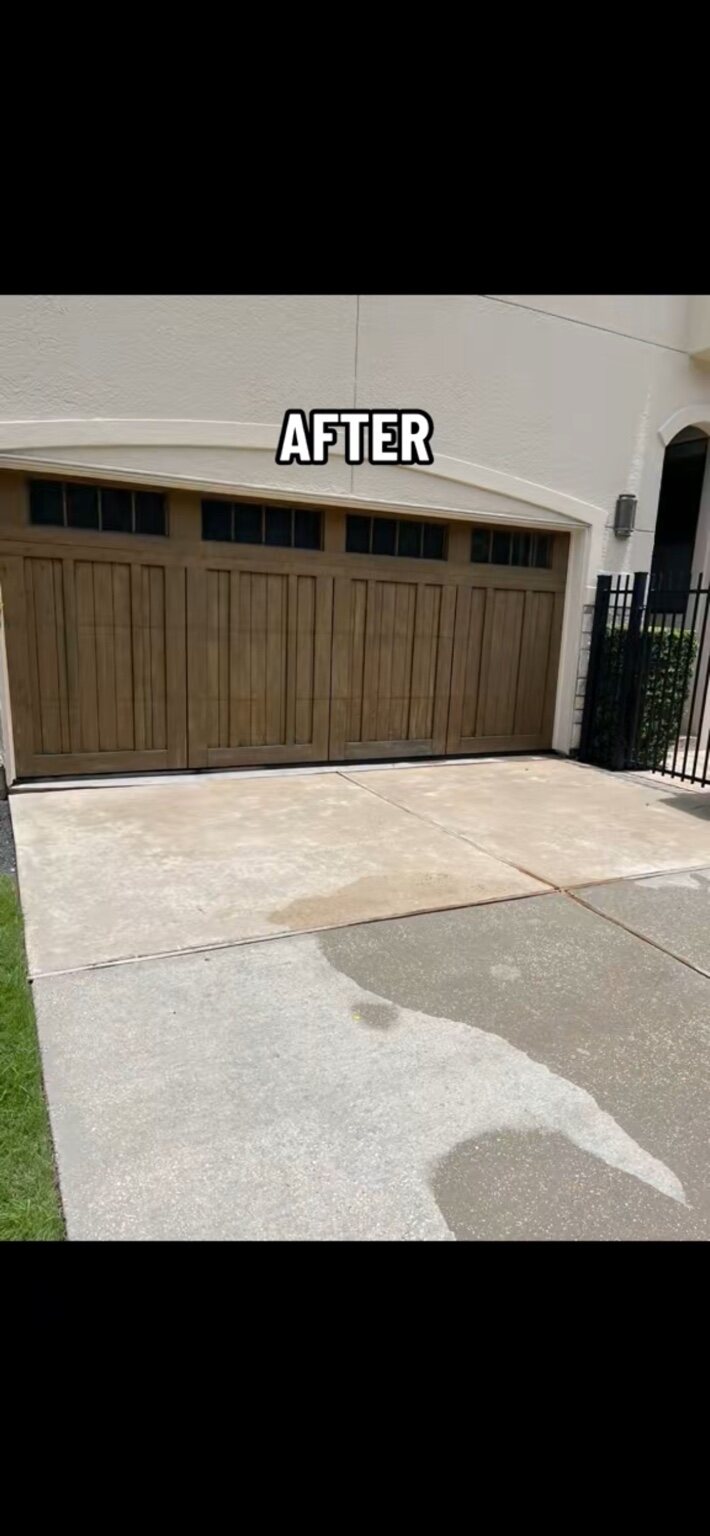
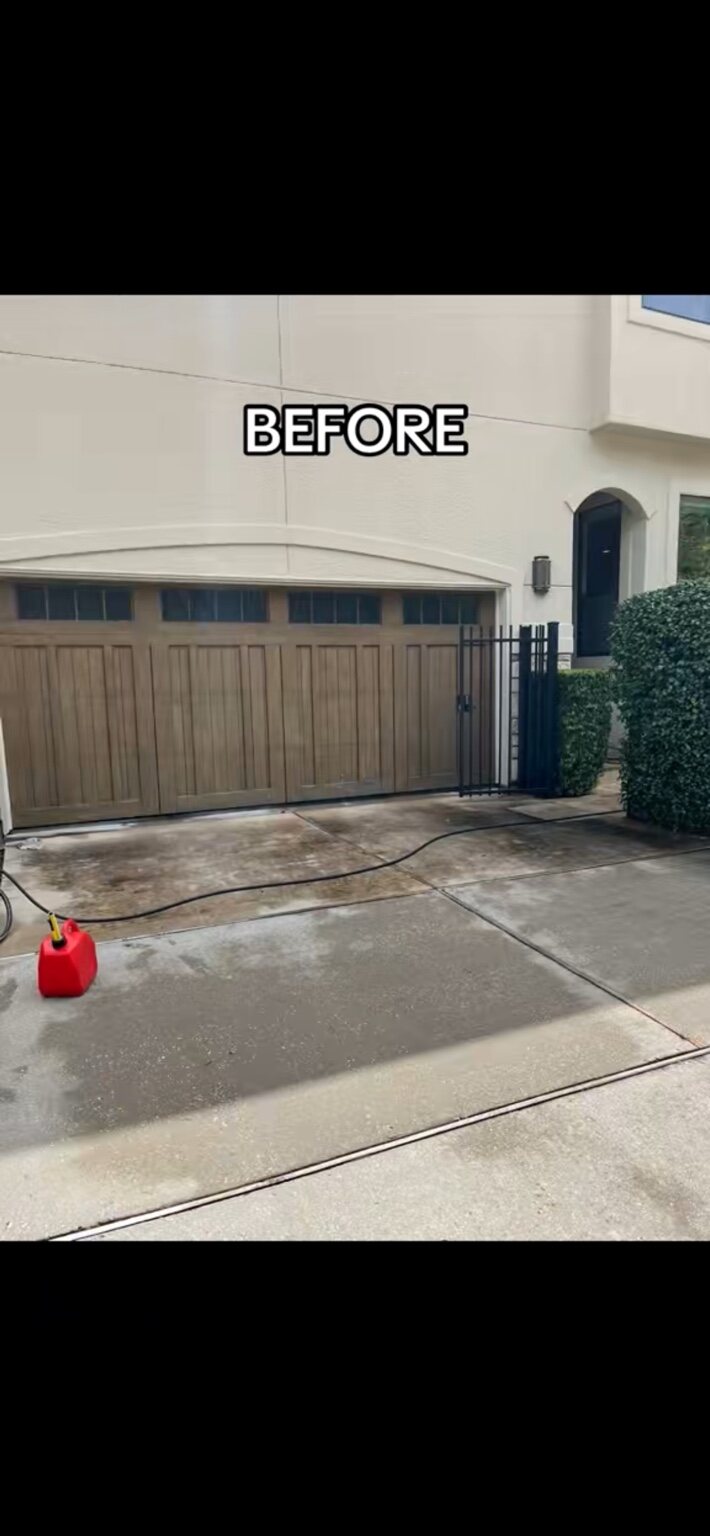
One driveway. One verified project. Drag to compare.
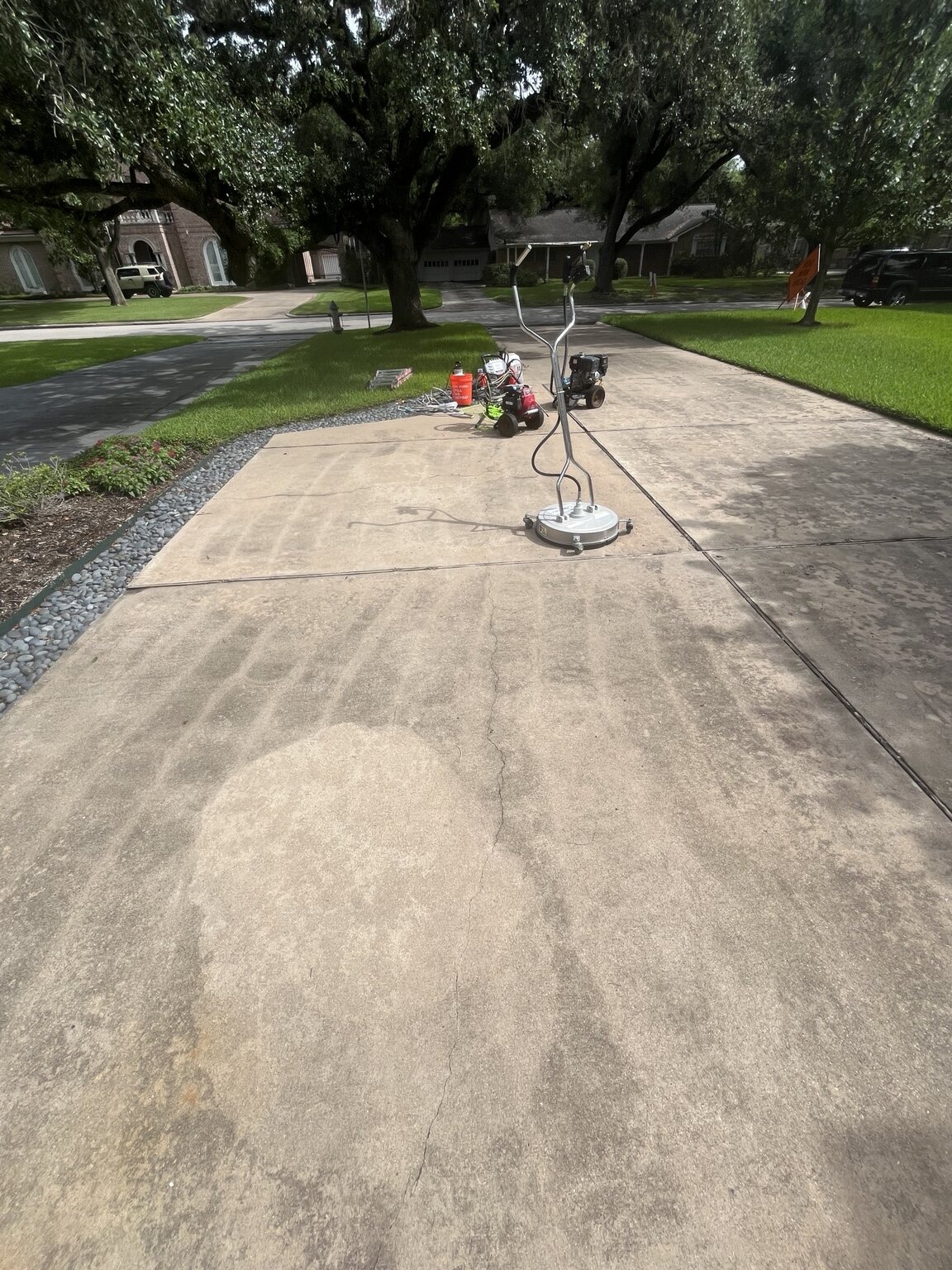
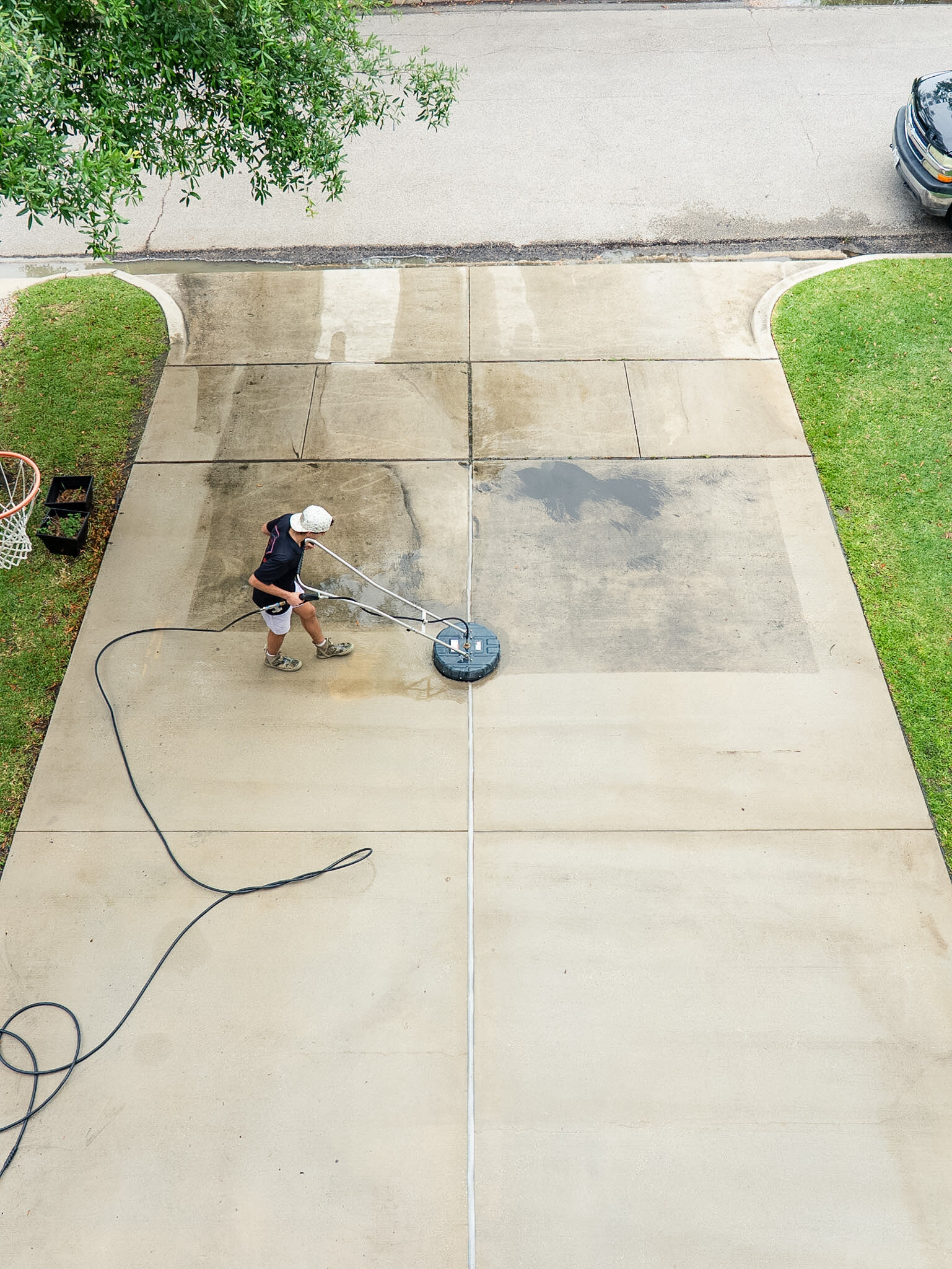
The concrete was cleaned with consistent surface-cleaner passes, then the edges and joints were detailed before the final rinse.
The equipment, the process, and the finish.
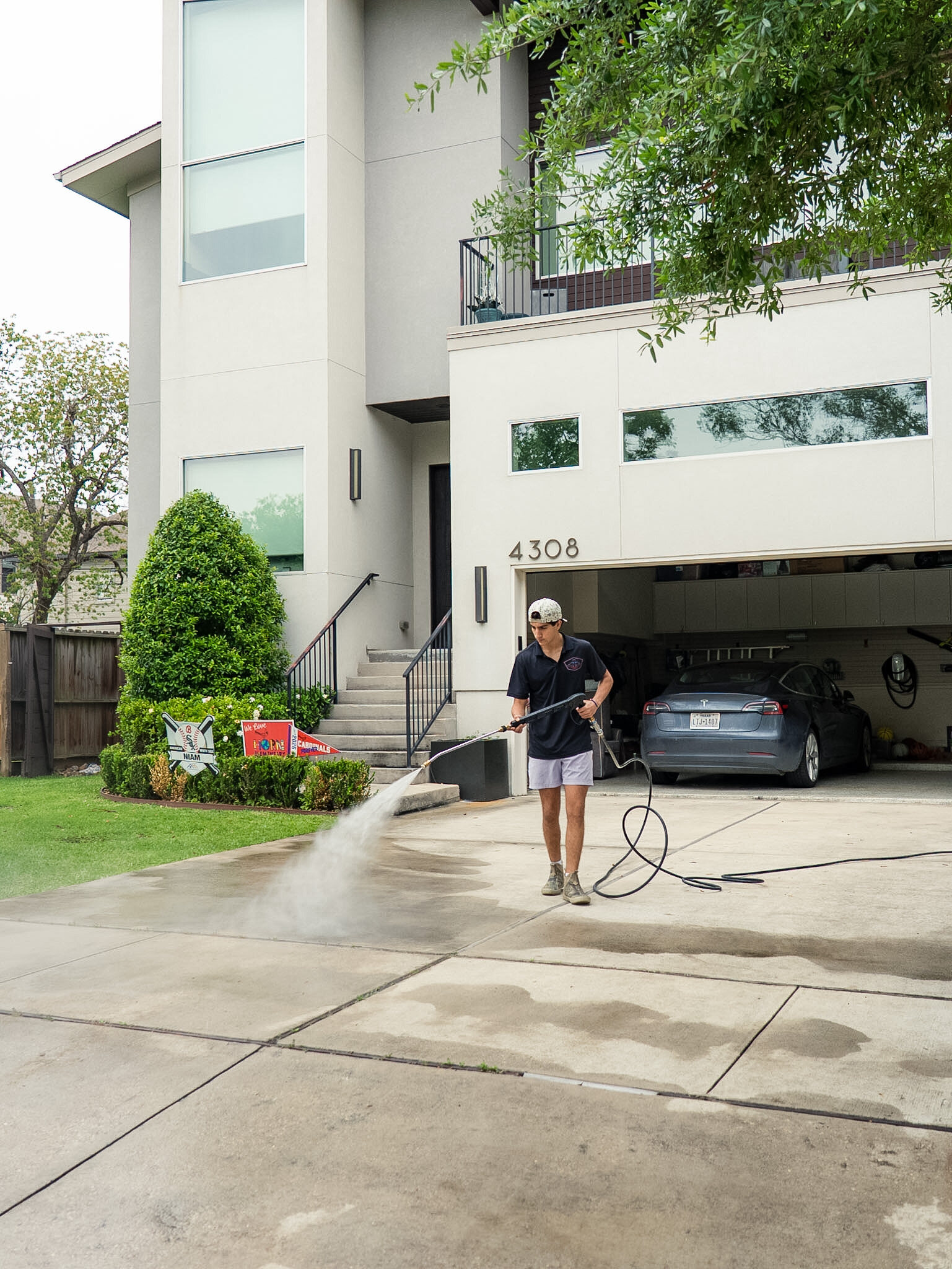
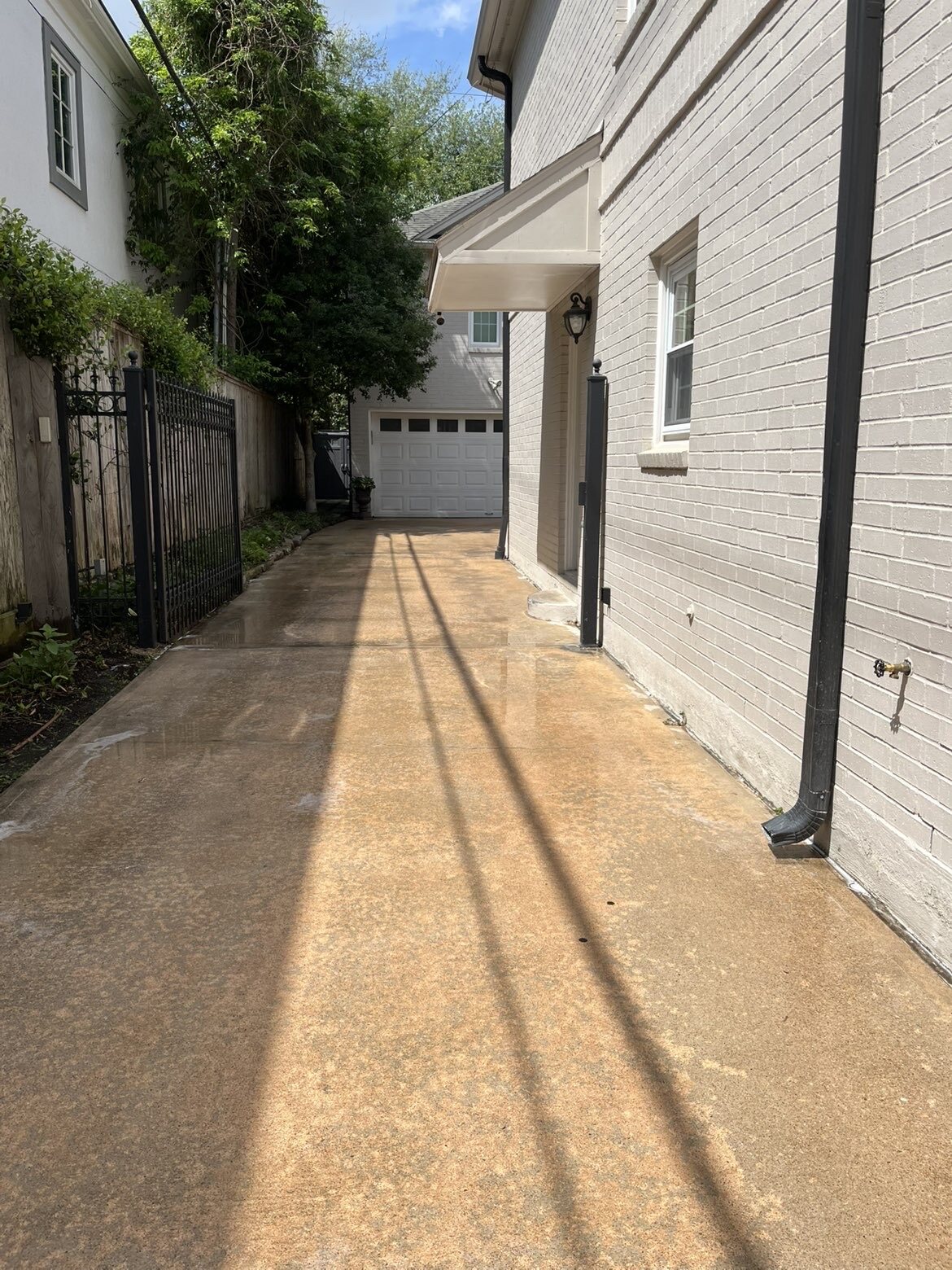
Real BPW project photographs showing hard-surface cleaning in progress and completed residential concrete.
What keeps the finish even
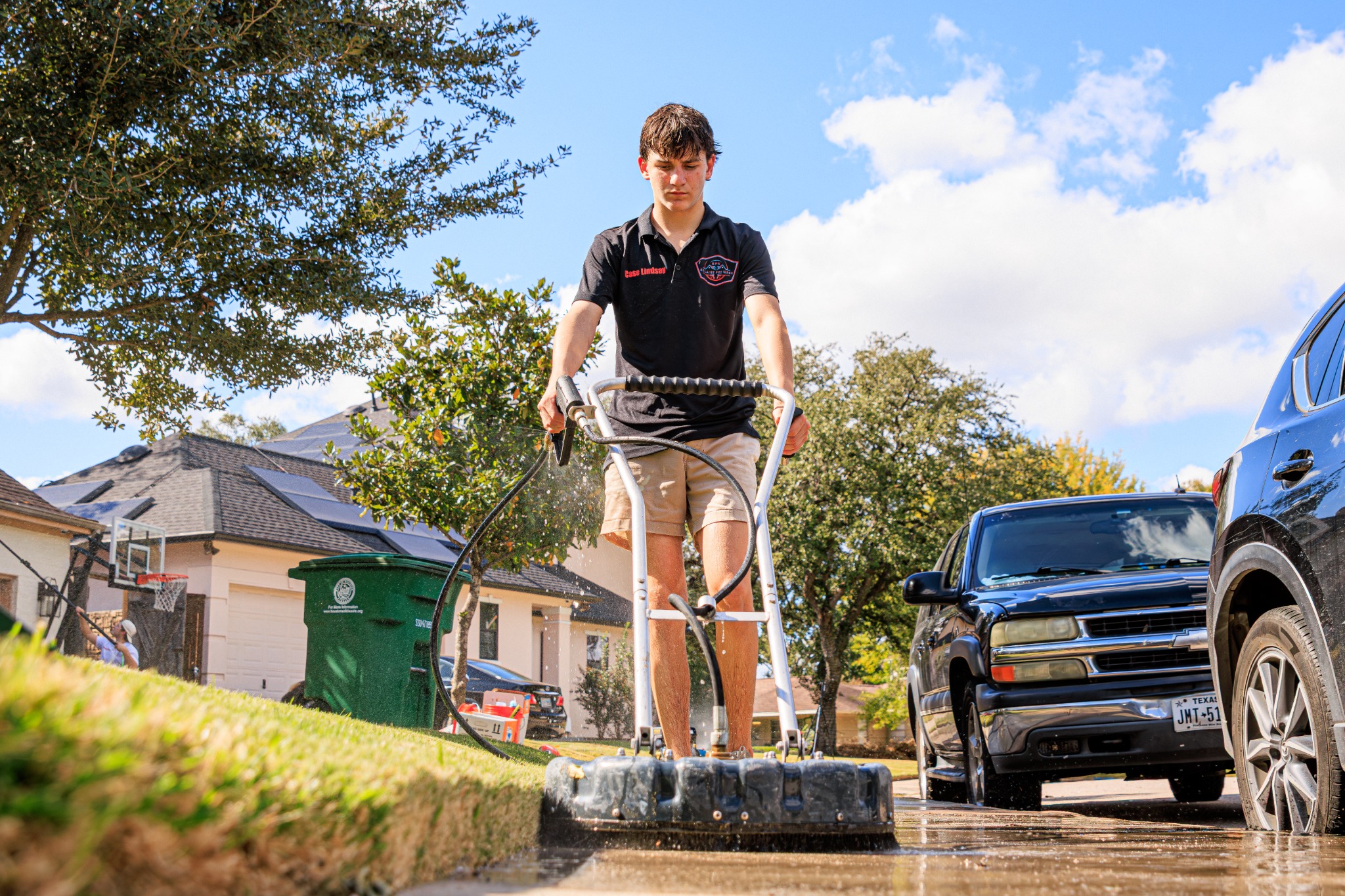
Flatwork gets a surface cleaner — a rotating head under a shroud that holds a constant distance and overlaps every pass. That's the single biggest reason our concrete comes out one tone instead of striped.
- 01 Pre-treat. Organic growth gets solution and dwell time so it releases instead of being blasted.
- 02 Surface clean. Consistent height, consistent speed, overlapping passes.
- 03 Detail the edges. Corners, expansion joints, and borders worked by hand where the head can't sit flat.
- 04 Rinse and direct. Runoff carried away from beds, drains, and the neighbor's side.
From photos to walkthrough
-
Send photos
Square footage and condition. Most driveways can be priced without a site visit.
-
Protect
Beds pre-wet, outlets and fixtures covered, vehicles and furniture moved clear.
-
Clean
Pre-treat, surface clean, detail the edges, rinse everything down and away.
-
Walk it
We walk the surfaces with you before the trailer moves.
What people book alongside it
Driveways we've cleaned
Most of our hard-surface work runs along the same handful of Houston neighborhoods.
Shared drives and alley aprons are common in Bellaire and West U — tell us which is yours and we'll price the whole run.
Pressure washing questions
Will pressure washing damage my concrete?
Can you get oil stains out of a driveway?
Do you need to use my water?
How long does a driveway take?
Is it safe for my plants?
How often should I have this done?
Orange stains need chemistry, not more pressure.
Irrigation, fertilizer, and battery stains are evaluated and spot-tested before treatment. Results depend on the source, surface, and how long the stain has been present.
Request a Rust-Stain Quote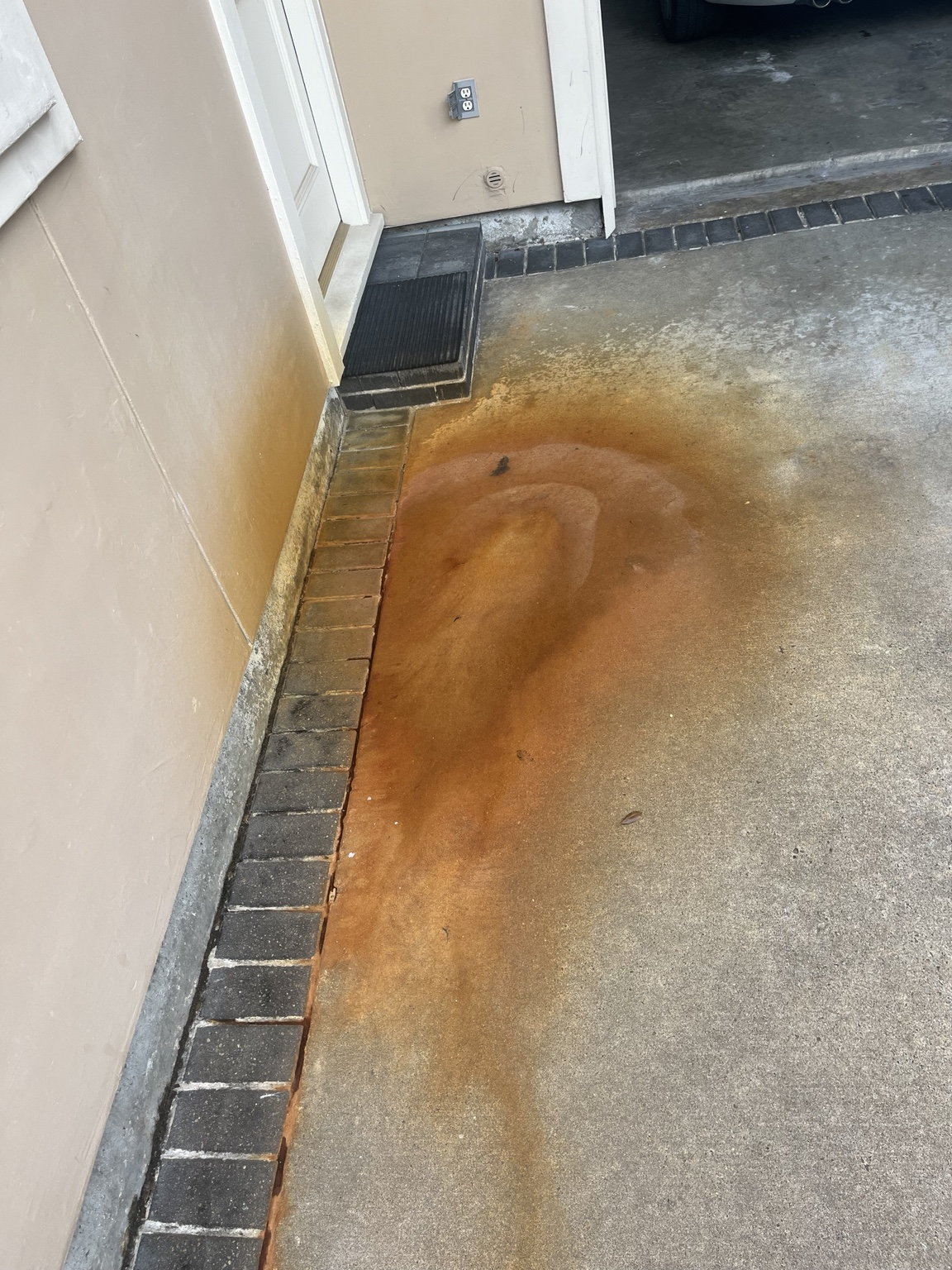
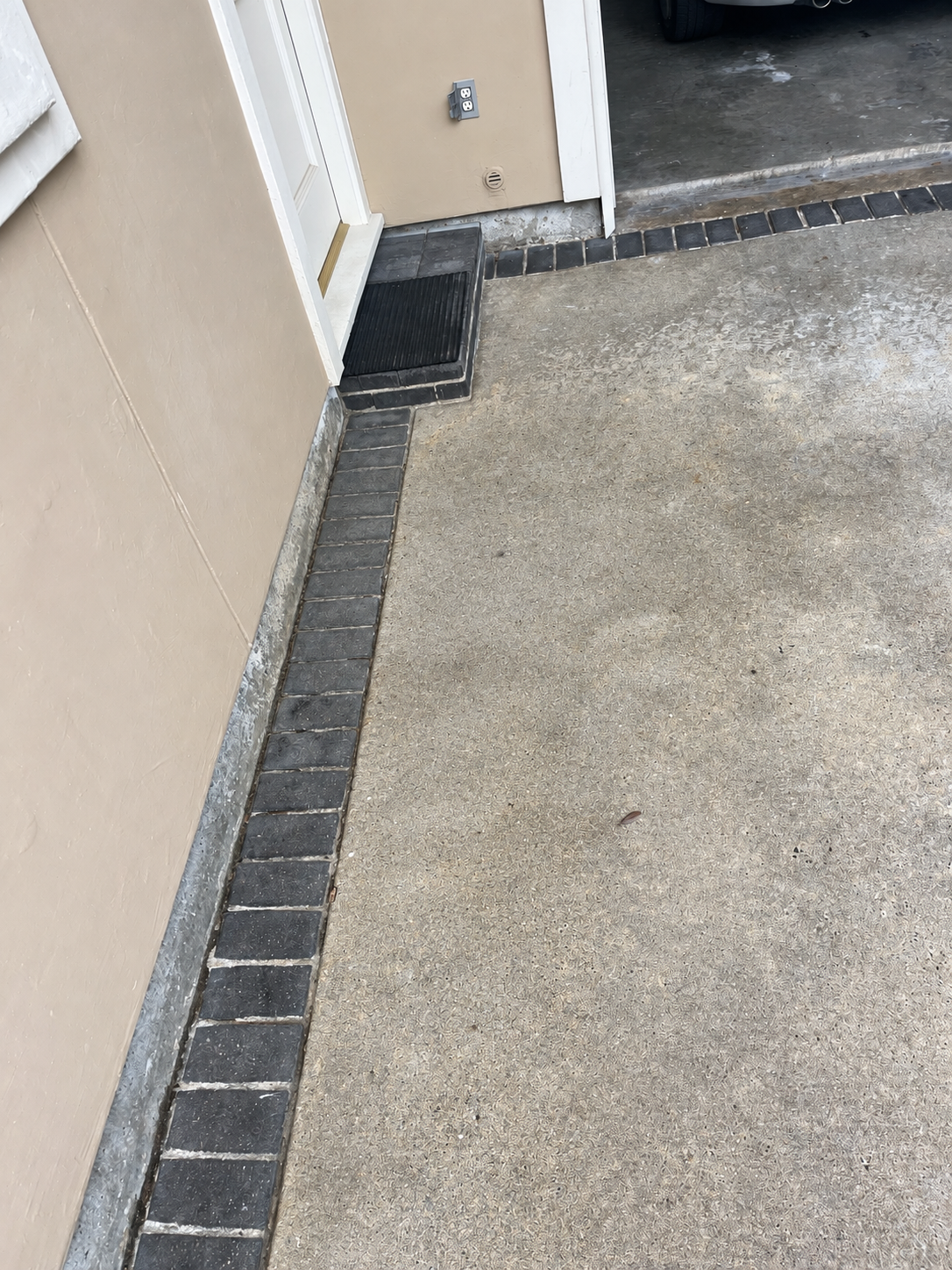
The potential-result image is a digital visualization based on this property's completed treatment because the original after-photo was not captured. It is not an original after-photo. Results vary by surface, stain source, and severity.
Send a photo of the driveway.
We'll come back with a firm number — after we review it.
Prefer to talk? Call or text 832-430-2122